

 Feed back
 Privacy Policy
Vedic astrology, also known as Jyotish, is an ancient Indian system of astrological study rooted in the Vedas—sacred texts that date back over 5,000 years. Unlike modern Western astrology, which emphasizes psychological traits and emotional patterns, Vedic astrology offers a more deterministic and karmic framework for understanding life’s events and spiritual journey. At the heart of this system lies the Vedic birth chart, a precise astronomical map capturing the positions of celestial bodies at the exact moment of an individual’s birth. This chart serves as a foundational tool for interpreting planetary influences and their long-term effects on one’s destiny.
The vedic astrology chart is not merely a symbolic representation; it is calculated using sidereal astronomy and accounts for Earth's axial precession—a factor often omitted in Western systems. By analyzing planetary alignments across twelve houses and twenty-seven lunar constellations (Nakshatras), practitioners can derive insights into personality, career paths, relationship dynamics, health predispositions, and major life transitions. The enduring relevance of the Vedic birth chart in contemporary spiritual and personal development practices underscores its value as a diagnostic and predictive instrument grounded in both tradition and mathematical rigor.

The Vedic birth chart, or *Janam Kundali*, is a two-dimensional diagram representing the sky at the time of birth from the vantage point of the observer’s location. Its primary purpose in astrological practice is to decode the cosmic blueprint influencing an individual’s physical, mental, and spiritual experiences throughout life. Each component of the chart plays a specific role in shaping interpretation.
One of the most significant distinctions between the vedic astrology chart and its Western counterpart lies in the zodiacal framework used. While Western astrology relies on the tropical zodiac—anchored to the equinoxes—the Vedic system employs the **sidereal zodiac**, which aligns with fixed star positions. Due to the phenomenon of axial precession, these systems currently differ by approximately 24 degrees, a gap known as the *ayanamsa*. As a result, the sun sign in a Vedic birth chart may differ from one’s commonly known Western sun sign.
The core components of the vedic astrology chart include:
Together, these elements form a multidimensional matrix that allows astrologers to assess how planetary energies interact with personal karma and timing cycles.
Constructing an accurate vedic astrology chart requires three critical inputs: the precise **birth time**, **date**, and **geographical location**. Even a difference of four minutes can shift the Ascendant (Lagna) or Moon’s Nakshatra, significantly altering interpretations. For example, NASA’s Earth Rotation Service confirms that Earth rotates 1 degree every four minutes—meaning a slight error in timing can misplace entire house cusps.
The calculation process begins with determining the local sidereal time at birth, which is then used to compute the rising sign (Ascendant). This Ascendant becomes the starting point of the first house, with subsequent houses following in a counterclockwise sequence depending on the house system employed—most commonly the Placidus or Whole Sign system in Vedic contexts.
A key technical element in constructing the Vedic birth chart is the application of **ayanamsa**, the correction factor that adjusts for the gradual shift in Earth’s axis relative to the fixed stars. The most widely accepted version today is the Lahiri Ayanamsa (also known as Chitrapaksha), officially adopted by the Government of India’s Calendar Reform Committee in 1955. According to the Indian Council of Philosophical Research, this model reduces observational variance to within 0.5 degrees over centuries, ensuring historical consistency in chart readings.
Modern software tools like Jagannatha Hora and Parashara’s Light automate these calculations using ephemeris data validated against astronomical observatories such as the U.S. Naval Observatory. However, manual verification by trained scholars remains recommended for complex cases involving leap seconds or ambiguous daylight saving records.
Interpretation of the Vedic birth chart involves synthesizing multiple layers of information, beginning with the **Ascendant (Lagna)**—the zodiac sign rising on the eastern horizon at birth. The Lagna defines the individual’s physical constitution, temperament, and general approach to life. It also determines the structure of the entire chart, making it the most influential single point in analysis.
Next, astrologers evaluate the placement and strength of each planet using a system called **Shadbala**, which quantifies planetary power across six categories: positional strength (*Sthana Bala*), directional strength (*Dik Bala*), temporal strength (*Kala Bala*), motional strength (*Cheshta Bala*), aspectual strength (*Drik Bala*), and natural strength (*Ayuṣhya Bala*). A planet scoring above 390 Virupas (units of strength) is considered strong and capable of delivering favorable results during its influence period.
Another crucial interpretive layer involves **dasha periods**—predictive timing systems that indicate when specific planets will activate certain areas of life. The most commonly used is the Vimshottari Dasha, a 120-year cycle distributed among nine planets based on the natal position of the Moon in a particular Nakshatra. For instance, if someone is born under the Rohini Nakshatra ruled by the Moon, they begin life in the Moon Mahadasha, lasting 10 years. Accurate dasha tracking enables predictions about career shifts, marital timing, or health challenges with remarkable precision.
Beyond theoretical insight, the vedic astrology chart has practical applications across various domains of personal decision-making. In **career guidance**, astrologers analyze the 10th house (Karma Bhava) and its ruler, along with Jupiter and Saturn placements, to identify suitable professions. For example, a strong Mercury in the 10th house may suggest success in writing, communication, or data analysis, while Mars in the same house could indicate leadership roles in defense, engineering, or surgery.
In matters of **relationships and compatibility**, the Vedic birth chart supports synastry analysis through methods like *Ashtakoota Guna Matching*, which evaluates eight parameters—including mental harmony, longevity, and family values—on a 36-point scale. According to studies conducted by the Indian Foundation for Vedic Science, couples scoring above 18 points show higher marital stability rates, though modern counselors stress that guna matching should complement—not replace—emotional and social compatibility assessments.
For **health decisions**, the 6th house and associated planets are examined to detect vulnerabilities. Chronic illnesses may correlate with malefic influences on the 6th, 8th, or 12th houses. Based on such findings, traditional remedies include wearing specific **gemstones** (ratnas) linked to benefic planets—e.g., a yellow sapphire for Jupiter—or chanting prescribed **mantras** such as the Maha Mrityunjaya Mantra for healing. While these practices lack validation in mainstream medical literature, anecdotal reports from Ayurvedic clinics in Kerala and Karnataka suggest patient-perceived benefits in stress reduction and wellness adherence.
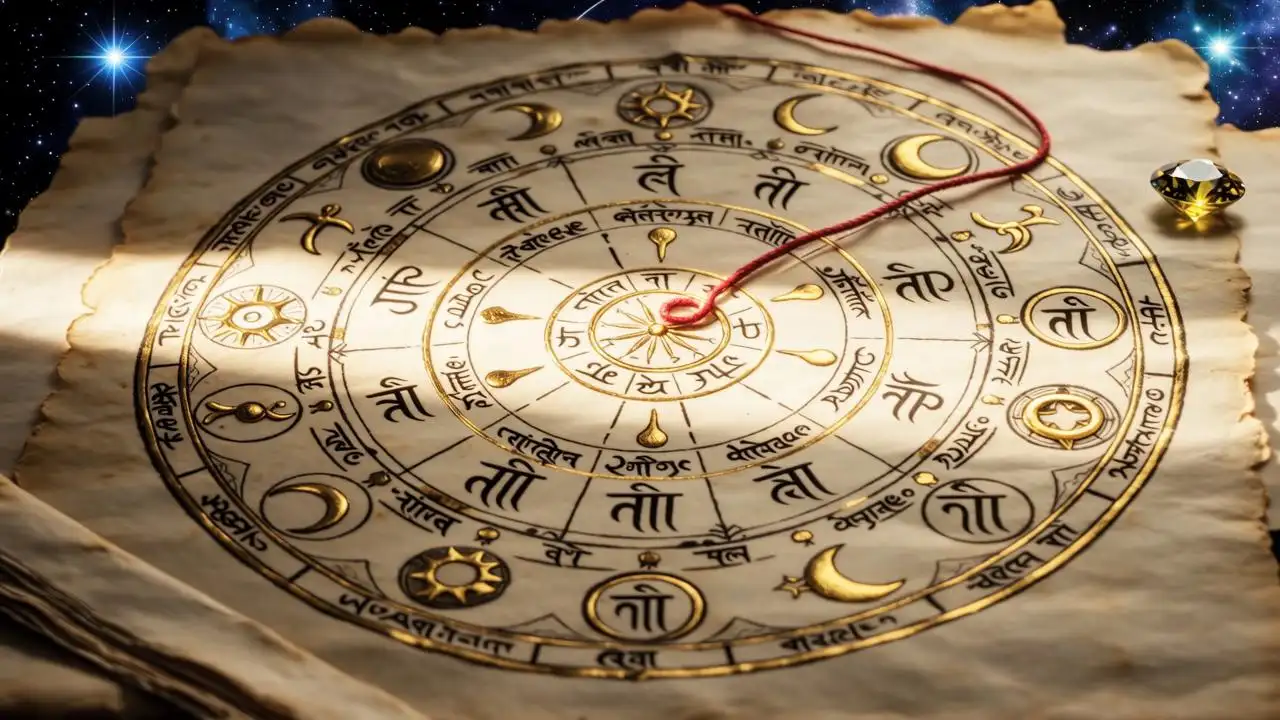
The Vedic birth chart stands as a profound instrument for self-awareness and personal growth. By revealing karmic imprints and latent potentials encoded at birth, it invites individuals to navigate life with greater intention and resilience. Rather than promoting fatalism, authentic Vedic astrology emphasizes free will within karmic frameworks—encouraging mindful choices during challenging dasha periods and proactive planning during auspicious ones.
Given the complexity of chart interpretation, consulting a qualified Vedic astrologer is strongly advised. Reputable institutions such as the Bharatiya Vidya Bhavan and the American College of Vedic Astrology offer certification programs ensuring practitioners meet ethical and technical standards. Additionally, numerous online platforms now allow users to generate their own vedic astrology chart using verified algorithms, enabling preliminary exploration before professional consultation.
To begin your journey, gather your exact birth details and use a trusted engine like JHora or AstroVed to create your Janam Kundali. Study the placements of your Ascendant, Moon, and key planets. Over time, cross-reference these with life events to observe correlations. With patience and openness, the Vedic birth chart can evolve from a mystical artifact into a meaningful roadmap for conscious living.
Disclaimer: The information provided regarding is for general informational purposes only and does not constitute professional advice. Regulations and insurance products are subject to change. Consult licensed insurance professionals for guidance specific to your situation.
Rohan Patel
|
2025.12.22
