

 Feed back
 Privacy Policy
The term the zodiac refers to a celestial coordinate system that divides the sky into twelve equal segments along the ecliptic—the apparent path of the Sun across the heavens over the course of a year. These divisions are known as the zodiac signs, each spanning 30 degrees of celestial longitude and traditionally associated with specific dates based on the Sun’s position at any given time. While rooted in astronomy, the zodiac signs have become central to astrology, a symbolic system used by many to interpret personality traits, emotional tendencies, and even life events. From daily horoscopes in newspapers to personalized birth charts, these signs play a notable role in modern culture. Their influence stretches far beyond entertainment, reflecting deep historical roots and enduring human fascination with the stars.
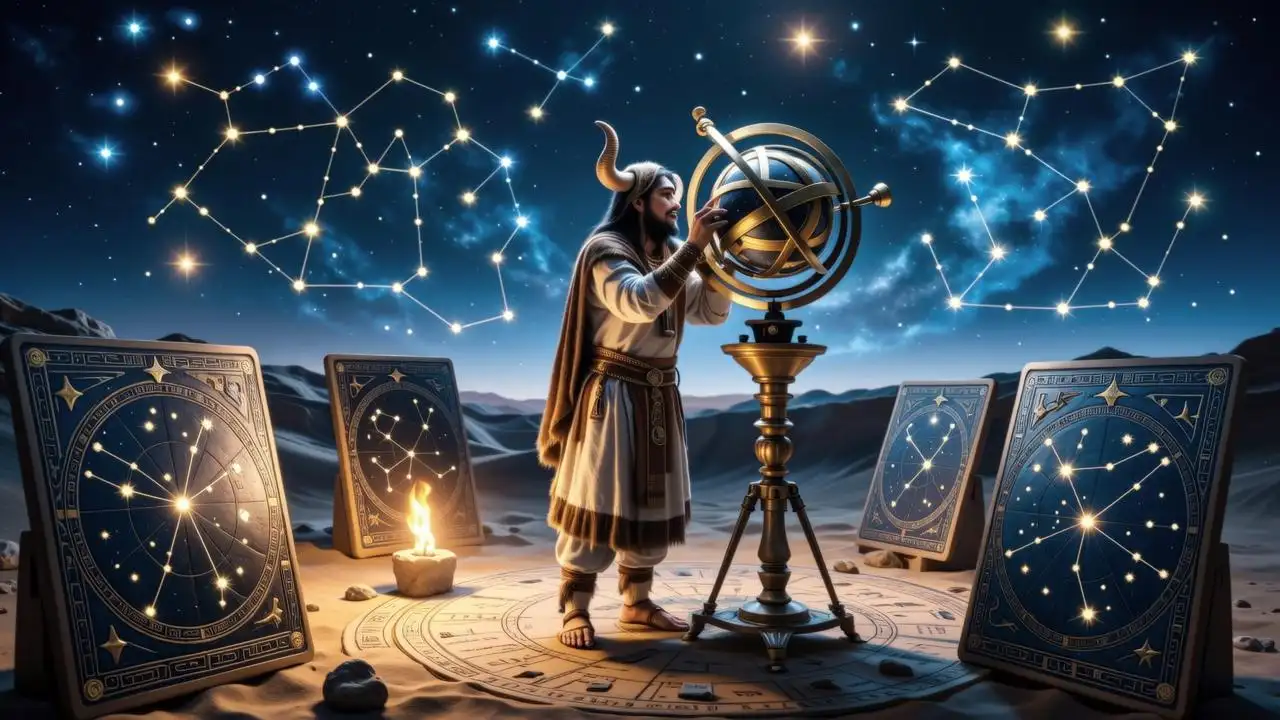
The zodiac is more than just a pop culture trend; it's a conceptual framework developed over millennia to make sense of humanity’s place in the cosmos. Each of the zodiac signs corresponds to one of twelve constellations that lie along the ecliptic plane. Though the actual constellations vary in size, Western astrology treats them as evenly spaced markers—each representing a distinct archetype. For example, Aries embodies initiative and courage, while Pisces is linked with intuition and empathy. These archetypes are believed to influence individuals born under their corresponding solar periods.
The relevance of the zodiac signs extends into personal identity and social interaction. Many people use their sun sign—a reflection of the Sun’s position at their moment of birth—as a shorthand for understanding themselves or others. This practice has permeated global culture, appearing in everything from dating apps (where users list their sign) to television shows and fashion campaigns. Historically, civilizations such as the Babylonians used early forms of the zodiac not only for divination but also for agricultural planning and religious rituals, aligning earthly activities with celestial cycles.
The earliest known foundations of the zodiac can be traced back to Mesopotamia around the 5th century BCE, where Babylonian astronomers mapped key star groups and observed planetary movements. They divided the ecliptic into twelve parts, associating each with a constellation and assigning mythological significance. These early star maps were later adopted and refined by Greek scholars during the Hellenistic period. Notably, the astronomer Claudius Ptolemy compiled and systematized this knowledge in his seminal work Tetrabiblos in the 2nd century CE, establishing the foundation for Western astrology.
Ptolemy’s model formalized the zodiac signs into a coherent 12-part system based on tropical coordinates—anchored to the equinoxes rather than fixed stars. This approach allowed astrologers to create consistent charts regardless of slight stellar drifts over time. Over centuries, the zodiac signs spread across cultures: the Indian (or Vedic) tradition developed a sidereal zodiac aligned with actual constellations, adjusting for precession, while Chinese astrology evolved independently using a 12-year animal cycle instead of constellations. Despite differences, all systems reflect a shared human impulse to find meaning in celestial patterns.
Each of the zodiac signs spans approximately one month and is associated with unique characteristics shaped by its ruling element and modality:
These traits are further contextualized through elemental groupings: Fire signs (Aries, Leo, Sagittarius) are seen as dynamic and inspirational; Earth signs (Taurus, Virgo, Capricorn) as grounded and practical; Air signs (Gemini, Libra, Aquarius) as intellectual and social; and Water signs (Cancer, Scorpio, Pisces) as emotional and intuitive. Modalities describe how energy is expressed—Cardinal signs initiate, Fixed signs sustain, and Mutable signs adapt.
One common point of confusion involves the distinction between the zodiac signs and the actual constellations after which they’re named. Due to the precession of the equinoxes—a slow wobble in Earth’s rotational axis over a 26,000-year cycle—the positions of the constellations have shifted relative to the calendar. As a result, someone born under “Leo” today may actually have the Sun in the constellation Cancer when viewed astronomically.
Western astrology uses the tropical zodiac, which is tied to Earth’s seasons and begins at the vernal equinox (around March 21), making Aries the first sign regardless of stellar alignment. In contrast, Vedic (Hindu) astrology employs the sidereal zodiac, which accounts for precession and aligns more closely with observable constellations. This difference typically results in a 23–24 degree offset between the two systems, meaning an individual’s sun sign may differ depending on which tradition is followed.
Another frequent misconception is the idea that Ophiuchus should be considered a “13th zodiac sign.” While the Sun does pass through the Ophiuchus constellation for about 18 days each year (roughly November 30 to December 17), this concept comes from modern astronomy, not traditional astrology. The inclusion of Ophiuchus was never part of the classical 12-sign framework established by Ptolemy and widely adopted across cultures. Therefore, within the context of the zodiac signs as historically defined, there remain exactly twelve.
In contemporary society, the zodiac signs serve both as tools for self-exploration and as cultural touchstones. Millions read daily horoscopes published by outlets like Astrology.com or featured in major newspapers such as The New York Times. According to a 2022 Pew Research Center survey, approximately 29% of U.S. adults say they believe astrology is “scientific,” while another 37% find it personally meaningful despite not viewing it as science. This suggests that many engage with the zodiac more as a psychological or narrative tool than as a literal predictor of fate.
Relationship compatibility is another popular application. For instance, Taurus (an Earth sign) and Libra (an Air sign) are often considered harmonious due to complementary qualities—Taurus offers stability, while Libra brings balance and charm. Tools like synastry charts compare two individuals’ natal placements to assess relational dynamics. However, academic research, including studies reviewed by the American Psychological Association, consistently finds no empirical evidence supporting astrological predictions. Instead, psychologists suggest that belief in horoscopes may stem from the Barnum effect—the tendency to accept vague, general statements as highly personal and accurate.
Nonetheless, exploring the zodiac signs can encourage introspection. Recognizing patterns in behavior—such as a Gemini’s love of communication or a Capricorn’s drive for achievement—can foster greater self-awareness when approached critically and without rigid determinism.

The zodiac signs occupy a unique space at the intersection of history, mythology, and psychology. From ancient Babylonian skywatchers to modern-day social media influencers interpreting moon phases, humanity’s engagement with the zodiac reflects a timeless desire to understand ourselves through the language of the stars. While not scientifically validated, these symbols continue to offer narrative structure, cultural connection, and moments of reflection.
Rather than treating the zodiac signs as deterministic rules, a more informed approach recognizes them as archetypal metaphors—useful for storytelling, creativity, and dialogue. Those interested in deeper exploration might study astronomy to appreciate celestial mechanics, delve into comparative mythology to trace symbolic origins, or examine cognitive science to understand why humans seek patterns in randomness.
In sum, the legacy of the zodiac endures not because it predicts the future, but because it speaks to enduring questions about identity, purpose, and our place in the universe.
Disclaimer: The content related to the zodiac signs and astrology discussed in this article is provided for informational and cultural reference purposes only. It does not constitute professional advice in astronomy, psychology, or any other field. Readers are encouraged to make decisions based on their own judgment and, where appropriate, consult qualified experts. The author and publisher assume no liability for any actions taken based on the information presented herein.
Emily Carter
|
2025.12.22
