

 Feed back
 Privacy Policy
inkcoreai.com
Astrology is a symbolic system that interprets the positions and movements of celestial bodies—such as planets and stars—as meaningful reflections of human experience and earthly events. While not a science in the empirical sense, astrology has been practiced for thousands of years across diverse cultures, from ancient Mesopotamia to classical Greece and modern-day Western societies. It operates on the principle that there is a correlation between cosmic patterns and life on Earth, particularly in terms of personality traits, emotional cycles, and significant life events. Today, interest in **astrology** continues to grow, especially through the widespread consumption of **horoscope** readings in print media, mobile apps, and online platforms. These daily or weekly forecasts offer insights into love, career, and personal growth, often framed around one’s sun sign—a key component derived from the position of the Sun at birth. This guide aims to provide an objective, **fact-based interpretation** of astrological concepts, helping readers understand how **celestial influences** are interpreted within this symbolic framework without conflating belief with scientific validation.
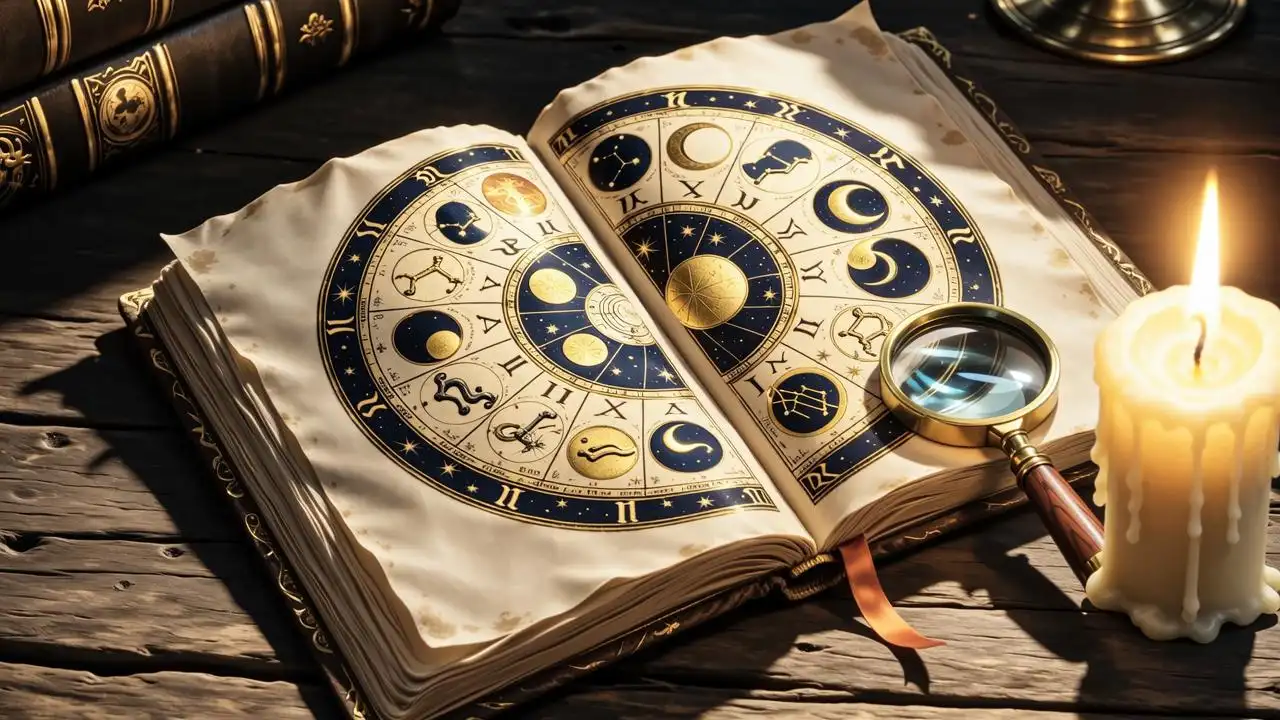
At its core, **astrology** functions as a symbolic language that links the apparent motion of celestial bodies to human affairs and natural phenomena. Unlike astronomy—the scientific study of celestial objects—astrology does not seek to explain physical laws but instead explores metaphorical and psychological meanings associated with planetary positions. The resurgence of public interest in **horoscope** content reflects a broader cultural shift toward self-reflection and personalized guidance. According to a 2023 Pew Research Center survey, nearly 30% of U.S. adults say they read their horoscopes regularly, with higher engagement among individuals aged 18–34. This trend suggests that many people use **celestial influences** as a tool for introspection rather than literal prediction. This guide takes a clear, logical approach to demystifying astrology by focusing on its structural components and historical context, enabling readers to engage with it thoughtfully and critically.
The structure of Western astrology rests on three foundational elements: the **zodiac signs**, planetary rulerships, and the twelve houses. The zodiac is divided into twelve equal segments of 30 degrees each, corresponding to specific periods of the year. Each sign belongs to one of four elements—**fire**, **earth**, **air**, and **water**—which shape its fundamental temperament. For example, fire signs (Aries, Leo, Sagittarius) are typically described as energetic and passionate, while earth signs (Taurus, Virgo, Capricorn) are seen as practical and grounded. Air signs (Gemini, Libra, Aquarius) emphasize intellect and communication, whereas water signs (Cancer, Scorpio, Pisces) are associated with emotion and intuition.
In addition to the Sun’s position, astrologers analyze the placement of key planetary bodies—including the Moon, Mercury, Venus, Mars, Jupiter, Saturn, Uranus, Neptune, and Pluto—each symbolizing different aspects of the psyche. For instance, **Venus** governs love and values, while **Mars** represents drive and aggression. These planets occupy signs and interact with each other through angular relationships known as aspects, such as conjunctions or oppositions, which further refine interpretation.
The third pillar of astrological analysis is the system of the **twelve houses**, which represent distinct areas of life. The first house relates to self-identity and appearance, the seventh to partnerships, the tenth to career and public image, and the fourth to home and family roots. A planet’s location in a particular house indicates where its energy is most likely to manifest in a person’s life. Together, signs, planets, and houses form a complex symbolic matrix used in constructing individualized charts.
The cornerstone of personalized **astrology** is the **natal chart**, also known as a birth chart. This diagram maps the precise positions of the planets at the moment of an individual’s birth, based on the exact time, date, and geographic location. Professional astrologers use ephemerides (astronomical tables) and software tools like Astro.com or Solar Fire to calculate these placements accurately. The rising sign, or ascendant—the zodiac sign emerging on the eastern horizon at birth—determines the layout of the houses and plays a crucial role in shaping personality expression.
Once the natal chart is constructed, astrologers interpret **planetary alignments** and aspects to uncover patterns related to behavior, challenges, and potential. For example, a square aspect between Mars and Saturn might suggest struggles with authority or delayed action, while a trine from Venus to Jupiter could indicate natural luck in relationships or financial matters. These interpretations are not deterministic but are viewed as tendencies or themes that can be worked with consciously.
Beyond natal analysis, **horoscope** culture thrives on generalized forecasts. Daily, weekly, and monthly horoscopes—often based solely on sun signs—are widely consumed for reflective purposes. Though less precise than full chart readings, they serve as prompts for mindfulness and decision-making. Platforms like Co-Star and The Cut have popularized more nuanced horoscopes that incorporate lunar phases and retrogrades, enhancing their relevance to contemporary audiences seeking emotional awareness and timing cues.
From a scientific standpoint, **astrology** lacks empirical support. Major institutions such as NASA and the American Astronomical Society affirm that there is no evidence linking planetary positions to human behavior. Controlled studies, including a well-known 1985 double-blind experiment published in *Nature*, found that astrologers could not match natal charts to individuals more accurately than chance. However, many scholars argue that dismissing astrology entirely overlooks its value as a psychological and symbolic system.
Psychologist Carl Jung introduced the concept of synchronicity—the idea that meaningful coincidences can occur without causal connection—which some use to frame astrology as a tool for introspection rather than prediction. In this view, **horoscope** readings function similarly to projective tests like the Rorschach inkblot, prompting self-discovery through metaphor. Recognizing the difference between belief systems and testable facts allows for a more balanced engagement. Despite ongoing debate, millions continue to find personal meaning in **fact-based interpretation** frameworks that integrate tradition, symbolism, and narrative coherence.
Modern applications of **practical astrology** extend beyond entertainment. Many individuals use **horoscope** trends to enhance emotional intelligence—for example, noting increased sensitivity during a full moon or heightened communication challenges during Mercury retrograde periods. While astronomical data confirms that Mercury does not actually move backward, the optical illusion caused by orbital speeds has become a widely recognized cultural metaphor for technological glitches and miscommunications.
In relationships, comparing **sun signs** offers a starting point for understanding compatibility, though deeper analysis involves synastry charts—overlays of two people’s natal charts to assess planetary interactions. For instance, harmonious aspects between one person’s Venus and another’s Mars may suggest strong romantic chemistry. Couples therapists occasionally reference these dynamics informally to facilitate dialogue about emotional needs and conflict styles.
Additionally, some professionals incorporate astrological cycles into personal planning. Entrepreneurs may avoid launching products during Mercury retrograde, while artists track lunar phases to align creative work with perceived energy shifts. Though anecdotal, these practices reflect a desire to live in rhythm with natural and symbolic cycles.

This guide has outlined the essential components of **astrology**, from the **zodiac signs** and planetary symbolism to the construction of **natal charts** and everyday use of **horoscope** forecasts. By approaching the subject with clarity and objectivity, readers can develop a **clear understanding** of how astrological systems function—not as scientifically proven mechanisms, but as culturally rich tools for reflection and self-awareness. Rather than accepting horoscopes at face value, critical engagement encourages thoughtful interpretation grounded in context and personal insight. For those interested in deeper exploration, reputable resources such as the American Federation of Astrologers (AFA) and the International Society for Astrological Research (ISAR) offer certified courses, research journals, and ethical guidelines. Ultimately, whether used for entertainment, inspiration, or introspection, **astrology** remains a enduring facet of human culture—one best approached with both curiosity and discernment.
Disclaimer: This article contains information related to astrology and horoscope interpretations for general informational purposes only. Such content is not intended as professional advice in psychology, medicine, or any regulated field. Readers are encouraged to make decisions based on their own judgment and, when necessary, consult qualified experts. The author and publisher assume no liability for actions taken based on the material presented herein.
Clara Bennett
|
2025.12.16
