

 Feed back
 Privacy Policy
inkcoreai.com
Astrology is a symbolic system that interprets the positions and movements of celestial bodies—such as the Sun, Moon, and planets—as meaningful reflections of human experiences, personality traits, and life events. While not recognized as a science by the scientific community, astrology has been practiced for thousands of years across cultures including ancient Babylonian, Egyptian, Greek, and Indian civilizations. It operates on the principle that there is a correlation between cosmic patterns and earthly affairs. Today, interest in astrology continues to grow, particularly with the rise of digital platforms offering accessible and often free tools. The availability of free astrology services online has democratized access to personalized insights, allowing individuals worldwide to explore their natal charts, daily horoscopes, and compatibility reports without financial barriers.
This surge in popularity can be attributed to both curiosity about self-understanding and the human desire for meaning in an increasingly complex world. According to a 2023 Pew Research Center report, approximately 29% of U.S. adults say they believe astrology is "very" or "somewhat" scientific—a figure that rises significantly among younger demographics. With smartphones and social media amplifying astrological content, users now engage with zodiac memes, moon phase trackers, and AI-generated readings at unprecedented levels. This guide aims to provide clear, factual, and objective insights into the foundations of astrology, how free tools work, their limitations, and how beginners can navigate this field responsibly.
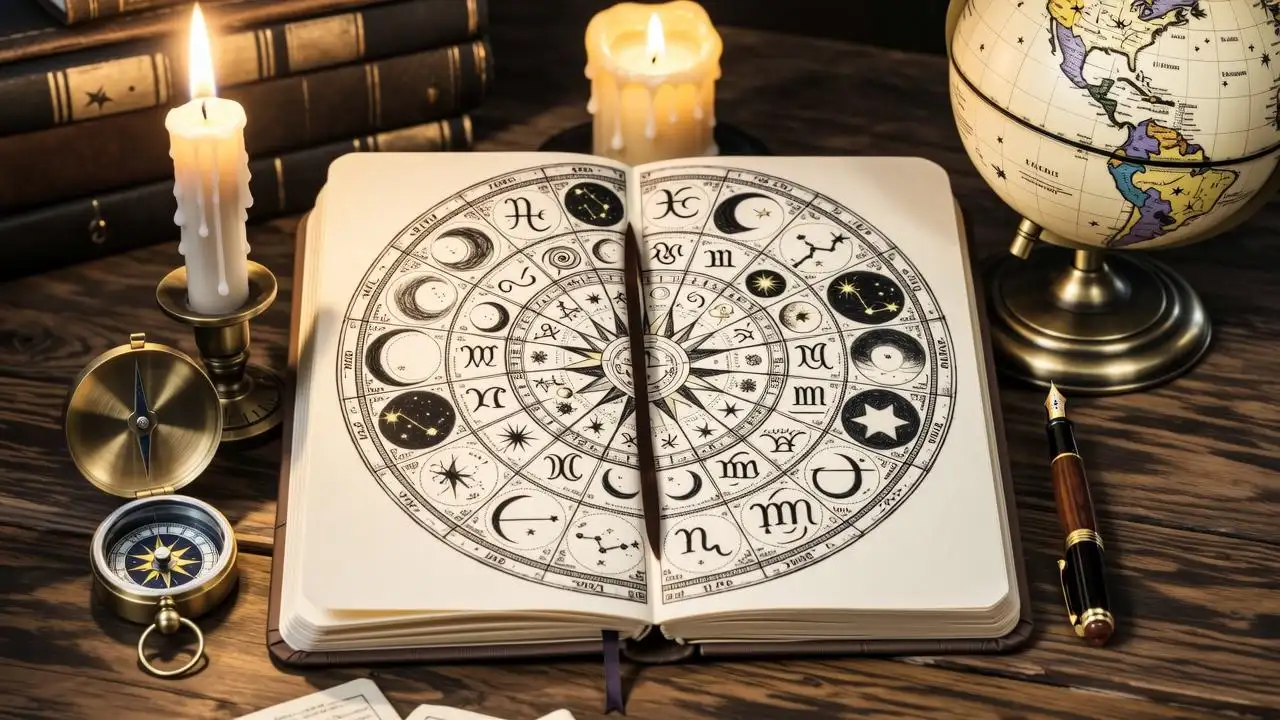
At the core of Western astrology are three fundamental components: the zodiac signs, planetary influences, and the astrological houses. Together, these elements form the framework used to interpret an individual’s birth chart, also known as a natal chart.
The zodiac consists of 12 signs, each occupying 30 degrees of the 360-degree ecliptic—the apparent path of the Sun around Earth over the course of a year. These signs are Aries, Taurus, Gemini, Cancer, Leo, Virgo, Libra, Scorpio, Sagittarius, Capricorn, Aquarius, and Pisces. Each sign is associated with one of four classical elements: fire, earth, air, or water. Fire signs (Aries, Leo, Sagittarius) are typically described as energetic, passionate, and impulsive; earth signs (Taurus, Virgo, Capricorn) as practical, grounded, and reliable; air signs (Gemini, Libra, Aquarius) as intellectual, communicative, and social; and water signs (Cancer, Scorpio, Pisces) as emotional, intuitive, and empathetic.
In astrology, planets represent different aspects of the psyche and life functions. For example, the Sun symbolizes core identity and ego, the Moon governs emotions and subconscious patterns, Mercury rules communication and thought processes, Venus influences love and values, and Mars drives action, desire, and aggression. Outer planets like Jupiter (expansion), Saturn (structure), Uranus (innovation), Neptune (illusion), and Pluto (transformation) move more slowly and are believed to affect generational trends rather than personal traits.
The 12 astrological houses correspond to specific areas of life, such as career, relationships, health, and spirituality. The first house relates to self-image and physical appearance, while the seventh governs partnerships, and the tenth represents public reputation and professional ambitions. The placement of planets within these houses at the time of birth provides nuanced insights into where certain energies are most active in a person's life. Understanding this triad—signs, planets, and houses—is essential for interpreting any astrology chart accurately.
Modern technology has made it easier than ever to access free astrology tools. These include automated birth chart generators, daily horoscope apps, synastry (compatibility) reports, and moon phase calendars. Websites like Astro.com, Cafe Astrology, and Co-Star offer robust free versions that allow users to generate detailed natal charts simply by entering their birth date, time, and location.
However, while these tools provide valuable starting points, they come with inherent limitations. Free services often rely on generalized interpretations and may lack the nuance offered by professional astrologers who consider planetary aspects, dignity, and transits in depth. For instance, a free horoscope might state, “You will have a lucky day,” without explaining why or how that energy manifests. In contrast, paid consultations usually include personalized analysis, follow-up sessions, and tailored guidance based on progressed charts or solar returns.
To use free astrology responsibly, users should approach these resources critically. Rather than treating predictions as deterministic, they should view them as reflective prompts—tools for introspection rather than absolute truths. Cross-referencing information across multiple reputable sources can also help mitigate bias or inaccuracies common in algorithm-driven platforms.
From a scientific standpoint, astrology lacks empirical support. Major institutions such as NASA and the American Astronomical Society emphasize that there is no known mechanism by which distant celestial bodies could influence human behavior in the way astrology suggests. Controlled studies, including a well-known 1985 double-blind experiment published in *Nature*, found no correlation between astrological signs and personality traits when participants were unaware of their own signs.
Despite this, many people continue to find psychological and cultural value in astrology. Psychologist Carl Jung proposed the concept of synchronicity—the idea that meaningful coincidences exist beyond cause and effect—which some use to explain subjective resonance with astrological descriptions. Additionally, the Barnum effect, a cognitive bias where individuals accept vague, general statements as personally accurate, helps explain why horoscopes often feel "true" even when broadly written.
Culturally, astrology serves as a narrative framework for understanding identity and change. In countries like India, Vedic astrology remains deeply integrated into social practices such as matchmaking for marriage. Even in secular contexts, astrology offers a language for discussing emotions, timing, and interpersonal dynamics in ways that feel intuitive and affirming.
For those interested in exploring free astrology, several trusted platforms offer high-quality, ad-supported content. Astro.com (run by the Swiss Astrological Society) provides highly accurate birth chart calculations and educational materials. Cafe Astrology features comprehensive interpretations for all chart elements and offers printable charts. Mobile apps like Co-Star Astrology and The Pattern use GPS data and machine learning to deliver real-time updates and relationship insights.
To generate your natal chart for free:
When interpreting results, maintain objectivity. Avoid jumping to conclusions based on single placements—for example, having Mars in Aries doesn’t automatically mean you’re aggressive; context matters. Be cautious of websites that make dramatic claims or push premium upgrades aggressively, as these may prioritize profit over insight.
Astrology occupies a unique space at the intersection of tradition, psychology, and popular culture. Whether approached as a spiritual practice, a tool for self-reflection, or a cultural phenomenon, it offers many people a sense of connection and clarity. The growing availability of free astrology resources empowers individuals to explore these ideas independently, though critical thinking remains essential.
This guide has outlined the foundational concepts of zodiac signs, planetary roles, and house systems, explained how free tools function and where they fall short, and reviewed the scientific skepticism surrounding astrological claims. By engaging with astrology in an informed and balanced way, readers can appreciate its symbolic richness without mistaking metaphor for causality.
For those wishing to go deeper, next steps include studying astrological aspects, tracking planetary transits, or consulting certified professionals through organizations like the International Society for Astrological Research (ISAR). Ultimately, the value of astrology lies not in prediction, but in prompting questions: Who am I? How do I relate to others? What cycles am I moving through? Answering these—with or without the stars—remains a deeply human journey.
【Disclaimer】The astrology-related content in this article is for informational and educational purposes only and does not constitute professional advice in psychology, astronomy, or any other field. Readers are encouraged to make decisions based on their own judgment and, when necessary, consult qualified experts. The author and publisher assume no liability for any actions taken based on the information provided herein.
Emily Carter
|
2025.12.16
