

 Feed back
 Privacy Policy
inkcoreai.com
Sagittarius, the ninth sign in the zodiac cycle, spans from November 22 to December 21 each year. As a sagittarius zodiac sign, it is symbolized by the Archer—a half-human, half-horse centaur drawing back a bow with an arrow aimed toward the sky. Governed by philosophical themes such as truth, expansion, and higher learning, Sagittarius embodies a restless pursuit of meaning beyond the material world. This fire sign is known for its boundless optimism, love of freedom, and insatiable curiosity about life’s deeper questions. Individuals born under this sign are often described as adventurous, honest, and open-minded, always seeking new experiences that broaden their horizons.
One of the defining features of Sagittarius is its classification as a fire element sign, placing it alongside Aries and Leo in a category associated with energy, passion, and action. However, unlike cardinal or fixed modalities, Sagittarius falls under the mutable modality, meaning it has a natural ability to adapt, transition, and inspire change. This combination of fire and mutability gives Sagittarians dynamic momentum—they are not only driven but also flexible in how they pursue their goals. The ruling planet of Sagittarius is Jupiter, the largest planet in our solar system and traditionally linked with growth, abundance, wisdom, and spiritual insight. Jupiter's expansive influence amplifies the Sagittarian desire for exploration, whether through travel, education, or philosophical inquiry.

The most recognizable emblem of the Sagittarius arrow symbol is the upward-pointing arrow fired by the centaur archer. This image is more than just a visual shorthand; it carries deep symbolic weight. The arrow represents direction, purpose, and forward motion—core aspects of the Sagittarian personality. Unlike signs focused on stability or introspection, Sagittarius is inherently future-oriented, always aiming toward something greater: knowledge, enlightenment, or personal freedom.
Mythologically, the centaur depicted in the Sagittarius constellation is often identified with Chiron, a wise and noble figure in Greek mythology renowned for his mastery of healing, music, and prophecy. Despite being a skilled warrior, Chiron used his abilities not for conquest but for teaching and guiding others. His arrow was not meant to harm but to pierce illusion and reveal truth—an allegory for the Sagittarian quest for authenticity and understanding. In astronomical terms, the stars forming the Sagittarius constellation resemble a teapot in the night sky, but ancient cultures interpreted the same pattern as an archer ready to launch his arrow into the cosmos.
The Sagittarius arrow symbol thus reflects both physical and metaphysical movement. It signifies the urge to break free from limitations, challenge dogma, and explore uncharted territories—whether geographical, intellectual, or spiritual. This relentless drive aligns perfectly with the mutable fire nature of the sign, which thrives on transformation and discovery. For those identifying with this sign, the arrow serves as a reminder to stay true to one’s path, maintain integrity in pursuit of goals, and remain open to the lessons found along the journey.
When considering Sagittarius lucky color, two hues stand out: blue and purple. These colors are not arbitrarily assigned but are rooted in astrological correspondences and psychological associations that resonate with the core values of the sign. Blue, particularly shades like royal blue or sapphire, symbolizes calmness, clarity, truth, and communication—all qualities highly valued by Sagittarians who seek honest dialogue and mental expansion.
Blue's connection to the throat chakra in esoteric traditions further reinforces its relevance, as Sagittarius governs higher mind functions and self-expression. Wearing blue clothing, using blue accessories, or incorporating blue décor in living or working spaces can help enhance focus, encourage truthful speech, and promote emotional balance—especially beneficial during periods of decision-making or long-term planning.
Purple, meanwhile, is closely tied to Jupiter, the ruling planet of Sagittarius. Historically associated with royalty, spirituality, and wisdom, purple embodies the elevated consciousness that Sagittarians strive to achieve. Deep purples and violets stimulate the third eye chakra, supporting intuition and inner vision—key tools for navigating life with purpose. Because Jupiter expands whatever it touches, wearing purple may amplify positive energies related to luck, prosperity, and spiritual insight.
Practically speaking, Sagittarians can incorporate their lucky colors into daily routines in simple yet effective ways. Choosing a blue notebook for journaling insights, wearing a purple scarf during important meetings, or meditating in a room painted with cool-toned walls can subtly reinforce alignment with their astrological essence. Even digital environments—such as phone wallpapers or email signatures—can reflect these colors to maintain energetic harmony throughout the day.
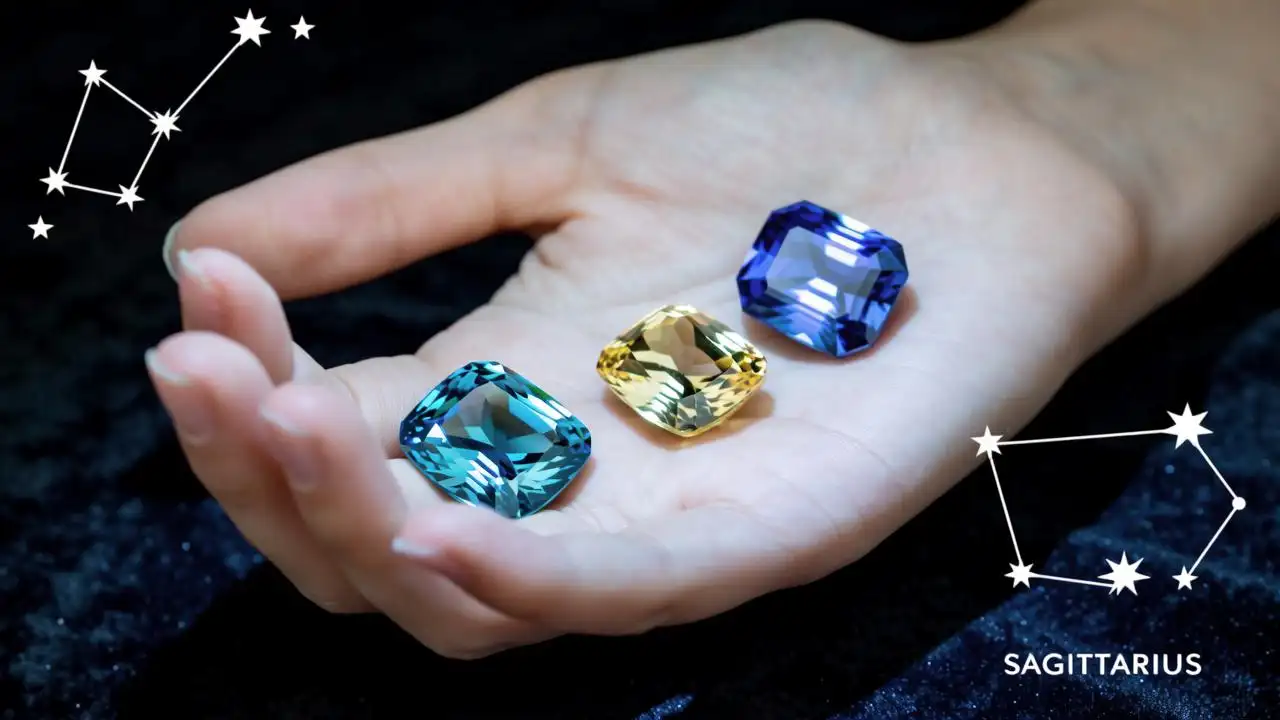
The traditional Sagittarius birthstones include turquoise, topaz, and tanzanite, each offering unique energetic properties that support the sign’s characteristics. Among these, yellow topaz is especially significant due to its historical association with strength, protection, and good fortune. According to the Gemological Institute of America (GIA), topaz enhances mental clarity and emotional resilience, making it ideal for Sagittarians who value honesty and intellectual rigor.
Turquoise, another key stone, has been revered across civilizations—from Native American tribes to ancient Egyptians—for its protective and grounding qualities. It promotes truthful communication and shields against negative energy, aligning well with the Sagittarian emphasis on integrity and openness. Tanzanite, though rarer and more modern in usage, resonates with spiritual awakening and transformation, encouraging deep self-reflection and expanded awareness.
The mention of “Gemini” in relation to “Sagittarius birthstone gemini” typically arises from confusion or overlap in alternative birthstone lists. While Gemini’s primary birthstones are usually agate, citrine, or pearl, some holistic sources suggest shared stones based on complementary traits. For instance, both signs value communication and mental agility, so clear quartz or amethyst might be recommended for both. However, there is no official astrological crossover between Sagittarius and Gemini regarding birthstones. It’s important to distinguish between cultural practices and standardized systems: the American Gem Trade Association (AGTA) recognizes topaz as the official November birthstone, directly aligning with most Sagittarius birthdays.
For Sagittarians, carrying or wearing these stones can serve practical purposes: boosting confidence before public speaking, enhancing dream recall during spiritual practice, or providing emotional balance during times of rapid change. Placing tanzanite near a meditation space or wearing a turquoise pendant can act as tangible reminders of personal intentions tied to growth and truth-seeking.
The concept of Sagittarius spirit animal meaning draws from symbolic interpretations rather than literal zoology. Two animals are most commonly associated with this sign: the panther and the horse—specifically embodied in the mythological form of the centaur. Each creature offers distinct insights into the multifaceted nature of Sagittarius.
The panther symbolizes courage, stealth, intuition, and independence. As a nocturnal predator, it moves with precision and purpose, relying on inner knowing rather than external validation. This mirrors the Sagittarian ability to trust their instincts when venturing into unfamiliar territory. The panther also represents personal power and resilience—qualities essential for maintaining autonomy in a world full of distractions and conflicting opinions.
The horse, particularly in the form of the centaur, reflects duality—the union of human intellect and animal instinct. This hybrid figure captures the central tension within Sagittarius: the struggle to balance wild freedom with disciplined pursuit of knowledge. The horse stands for mobility, endurance, and the joy of movement, all of which resonate with the Sagittarian love of travel and adventure. Together, the panther and horse illustrate the complete spectrum of Sagittarian energy: bold yet reflective, free-spirited yet goal-driven.
Spiritual teachings suggest that connecting with these animal guides through visualization, art, or meditation can deepen self-awareness. For example, imagining oneself riding a powerful stallion across vast plains may evoke feelings of liberation and purpose, while envisioning a panther moving silently through the forest can foster inner stillness and strategic thinking.
Understanding the full identity of Sagittarius involves integrating its many symbolic dimensions—the Sagittarius arrow symbol pointing toward truth, the empowering effects of Sagittarius lucky color, the grounding presence of Sagittarius birthstone gemini-related gems like topaz and turquoise, and the profound guidance offered by Sagittarius spirit animal meaning. Together, these elements paint a comprehensive picture of a sign defined by exploration, honesty, and the relentless pursuit of meaning.
By recognizing how these symbols interconnect, individuals born under the sagittarius zodiac sign can cultivate greater self-awareness and intentionality in their lives. Whether choosing attire in empowering shades of blue and purple, carrying a piece of topaz for emotional balance, or drawing inspiration from the panther’s courage and the horse’s stamina, practical applications abound. Astrology does not dictate fate, but it offers a framework for reflection and personal development.
Ultimately, Sagittarius stands as a beacon of adventure, truth, and growth in the zodiac. Its energy encourages us all—not just those born under its influence—to aim high, seek wisdom, and move forward with integrity and optimism.
【Disclaimer】 The information regarding Sagittarius and related astrological content provided in this article is intended for general educational and illustrative purposes only. It does not constitute professional advice in astrology, psychology, or any other field. Readers are encouraged to make informed decisions based on personal judgment and, where appropriate, consultation with qualified experts. The author and publisher disclaim any liability arising from the use or reliance on the contents of this article.
Oliver Grant
|
2025.12.02
