

 Feed back
 Privacy Policy
inkcoreai.com
The ancient Maya civilization developed one of the most sophisticated spiritual and scientific traditions in human history. Central to their worldview was Mayan astrology, a complex system that intertwined celestial observation with daily life, ritual, and personal identity. Unlike modern Western astrology, which is largely based on the solar year and twelve zodiac signs, Mayan astrological practices were grounded in precise astronomical calculations and cyclical timekeeping. These systems reflected a deep reverence for cosmic order and natural rhythms.
Modern interest in Mayan astrology has surged, particularly following widespread public attention around the end of the 13th b’ak’tun in the Long Count calendar in December 2012. While often misrepresented as a "doomsday" prediction, this event actually marked a significant cycle completion—an auspicious moment for renewal rather than destruction. Today, people across the United States and beyond are drawn to Maya civilization history not only for its architectural marvels like Tikal and Chichén Itzá but also for its intricate understanding of time and spirituality.
This guide aims to provide a clear, factual overview of Mayan astrological systems, focusing on the structure of the Mayan calendar, the meaning behind each Mayan zodiac sign, and the symbolic language encoded in glyphs and carvings. By exploring these elements through an educational and historically accurate lens, readers can gain deeper insight into how the Maya perceived the universe and their place within it.
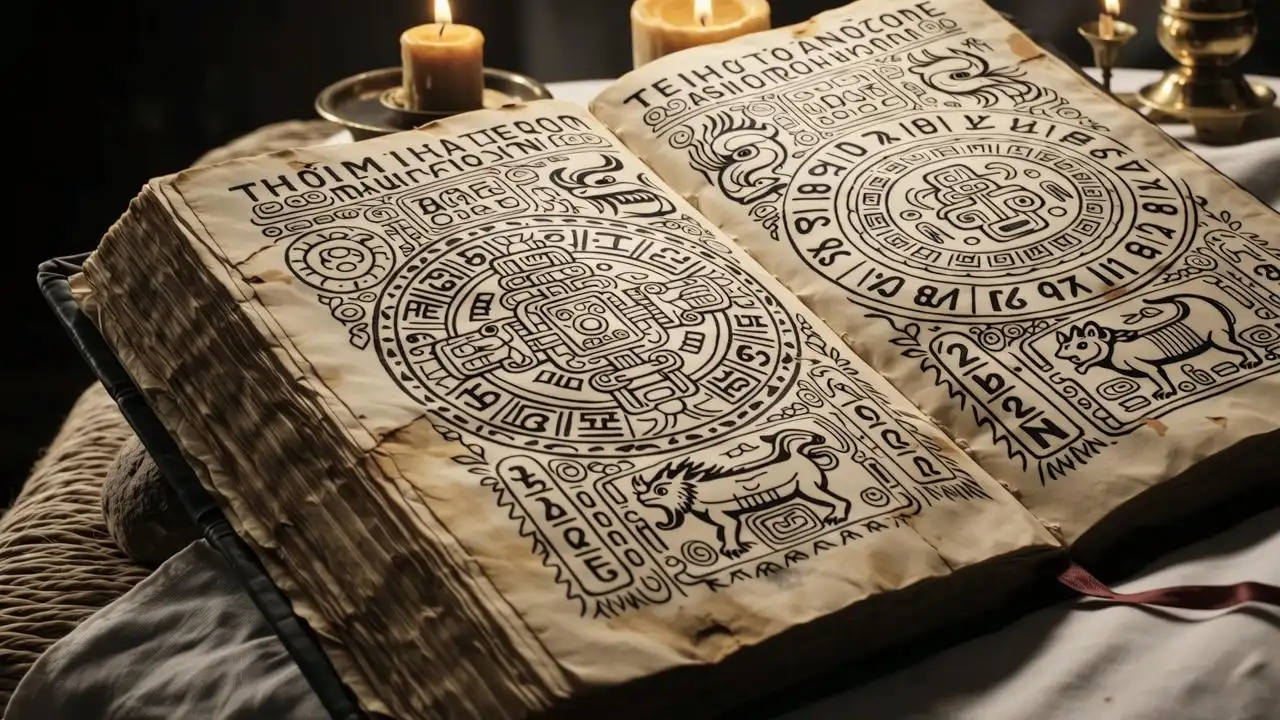
At the heart of Mayan astrology lies a tripartite calendar system composed of the Haab’, the Tzolk’in, and the Long Count. Each served distinct yet interlocking purposes, allowing the Maya to track both practical and sacred cycles with remarkable precision.
The Haab’ was a 365-day solar calendar divided into 18 months of 20 days each, plus a short period of five “nameless” days considered unlucky. It aligned closely with the agricultural year, guiding planting and harvesting schedules. In contrast, the Tzolk’in was a 260-day ritual calendar made up of 20 named days combined with numbers 1 through 13, creating a unique combination every 260 days. This cycle formed the foundation of personal destiny and divination in Mayan culture.
The convergence of the Haab’ and Tzolk’in created the Calendar Round—a 52-year cycle during which no date would repeat. Beyond this, the Long Count provided a linear method of tracking longer spans of time, famously used to record historical events over thousands of years. For instance, the widely discussed date of December 21, 2012, corresponds to 13.0.0.0.0 in the Long Count, marking the completion of a 5,125-year cycle.
Astronomy played a crucial role in refining these calendars. The Maya observed solstices, equinoxes, and planetary movements—especially Venus—with instruments such as sighting tubes and precisely aligned temples. At El Caracol in Chichén Itzá, architectural features align with Venus’s rising points, demonstrating advanced observational capabilities. These astronomical insights ensured accurate timekeeping and informed religious ceremonies, warfare decisions, and royal successions.
In the Tzolk’in calendar, each day is governed by a specific energy or spirit known as a “Lord of the Day.” There are 13 such lords, corresponding to the numbers 1 through 13, which combine with 20 day names (such as Imix, Manik, and Eb) to form the complete set of Tzolk’in signs. Together, they create a dynamic framework for interpreting personality traits and life paths.
For example, someone born under **Imix** (Day 1) is often described as creative, intuitive, and connected to water and beginnings—symbolized by the crocodile emerging from primordial waters. In contrast, **Manik**, associated with the deer, represents grace, healing, and service, while **Eb**, symbolized by the tooth or road, signifies determination and forward movement despite obstacles.
Each Mayan zodiac sign carries both positive attributes and challenges. These interpretations were traditionally used by priests and shamans for guidance, much like horoscopes today. However, unlike the Western zodiac, which emphasizes sun signs based on birth month, Mayan astrology considers multiple layers of timing—including the day number, day name, and position within larger cycles—for a more nuanced reading.
Comparisons between Western and Mayan systems reveal fundamental differences in philosophy. While Western astrology focuses on individual psychology and emotional tendencies, Mayan astrology emphasizes duty, community roles, and alignment with cosmic forces. This reflects a broader cultural orientation toward harmony with nature and societal balance.
Central to understanding Mayan astrology is familiarity with its rich visual language. Mayan astrology symbols appear throughout surviving codices—the Dresden, Madrid, and Paris manuscripts—and temple carvings, depicting gods, animals, celestial bodies, and abstract concepts.
Glyphs functioned both phonetically and ideographically, encoding complex ideas in compact forms. For instance, the glyph for **K’an** (meaning “precious” or “yellow”) might represent corn, the sun, or divine sustenance depending on context. Similarly, the jaguar, a recurring motif, symbolizes the night sun traveling through the underworld and is associated with power, mystery, and shamanic vision.
Cosmic imagery frequently illustrates planetary movements and eclipse predictions. The Dresden Codex contains detailed tables forecasting lunar and solar eclipses with accuracy rivaling modern calculations. These were not merely academic exercises; they held profound spiritual significance, believed to influence human affairs and require ritual intervention.
In divination practices, priests interpreted combinations of glyphs and calendar dates to advise rulers on warfare, marriage, construction projects, and offerings. Personal consultations could determine auspicious days for naming children or beginning journeys. Even today, some contemporary Maya communities in Guatemala and southern Mexico continue these traditions, preserving ancestral knowledge through oral transmission.
To fully appreciate Mayan astrology, one must understand the broader scope of Maya civilization history. Flourishing in Mesoamerica from approximately 2000 BCE to the peak of the Classic period (250–900 CE), the Maya established city-states across present-day southern Mexico, Belize, Guatemala, Honduras, and El Salvador.
They were among the earliest civilizations in the Western Hemisphere to develop a fully functional writing system, using logograms and syllabic signs inscribed on stelae, ceramics, and bark-paper books. Their achievements in mathematics included the concept of zero—a critical advancement centuries ahead of its adoption in Europe—and a vigesimal (base-20) number system.
As ancient astronomers, the Maya tracked the movements of the sun, moon, Mars, and Venus with extraordinary accuracy. They calculated the solar year at 365.242 days—just 0.002 days off from the modern measurement. Such precision enabled them to synchronize their calendars over vast periods, reinforcing the legitimacy of kingship and religious authority.
Despite the decline of major urban centers after 900 CE—likely due to environmental degradation, warfare, and political instability—Mayan culture persisted. Millions of Maya descendants still speak Mayan languages and maintain aspects of traditional cosmology. Their intellectual legacy continues to inform archaeological research and inspire global interest in pre-Columbian science.
The enduring appeal of Mayan astrology in contemporary culture reflects a growing desire to reconnect with indigenous wisdom and alternative ways of understanding time and self. From apps that generate personalized Tzolk’in birthdays to wellness retreats incorporating Mayan rituals, modern applications abound—but they must be approached with care.
Respecting cultural heritage means acknowledging that these systems originated within living traditions and should not be reduced to trends or commercialized without context. Cultural appropriation occurs when sacred practices are extracted from their original settings and repackaged for profit without permission or understanding.
For those seeking authentic knowledge, numerous educational resources are available. Institutions such as the Peabody Museum at Harvard University, the National Museum of the American Indian in Washington, D.C., and UNESCO’s Memory of the World program preserve and share Mayan texts and artifacts. Scholarly works by experts like Dr. David Stuart and Dr. Linda Schele offer accessible yet rigorous insights into Mayan writing and cosmology.
Ultimately, studying Mayan astrology offers more than entertainment—it invites reflection on humanity’s relationship with time, nature, and the cosmos. As we navigate an increasingly complex world, the precision and depth of Mayan thought remind us of the value of long-term thinking and spiritual awareness rooted in observation and respect.
【Disclaimer】 This article discusses topics related to Astrology for informational and educational purposes only. It does not constitute professional advice in astronomy, anthropology, or spiritual practice. Readers are encouraged to consult qualified experts before making decisions based on the content herein. The author and publisher disclaim any liability arising from the use of this information.
Elias Carter
|
2025.12.02
