

 Feed back
 Privacy Policy
inkcoreai.com
Astrology is a symbolic system that interprets the positions and movements of celestial bodies—such as the Sun, Moon, planets, and stars—as having meaningful influences on human affairs and natural phenomena. While often associated with horoscopes in newspapers and online platforms, the astrology meaning extends far beyond daily predictions. Historically, astrology served as a framework for understanding time, destiny, and the cosmos, playing a central role in ancient cultures from Babylon to India. In modern times, people use astrology primarily for self-reflection, relationship compatibility analysis, and personal growth. It offers a language through which individuals explore personality traits, emotional patterns, and life cycles. However, it is essential to distinguish between **astrology** and **astronomy**: while both study celestial objects, astronomy is a scientific discipline grounded in empirical observation and physics, whereas astrology is considered a metaphysical or symbolic practice without scientific validation.
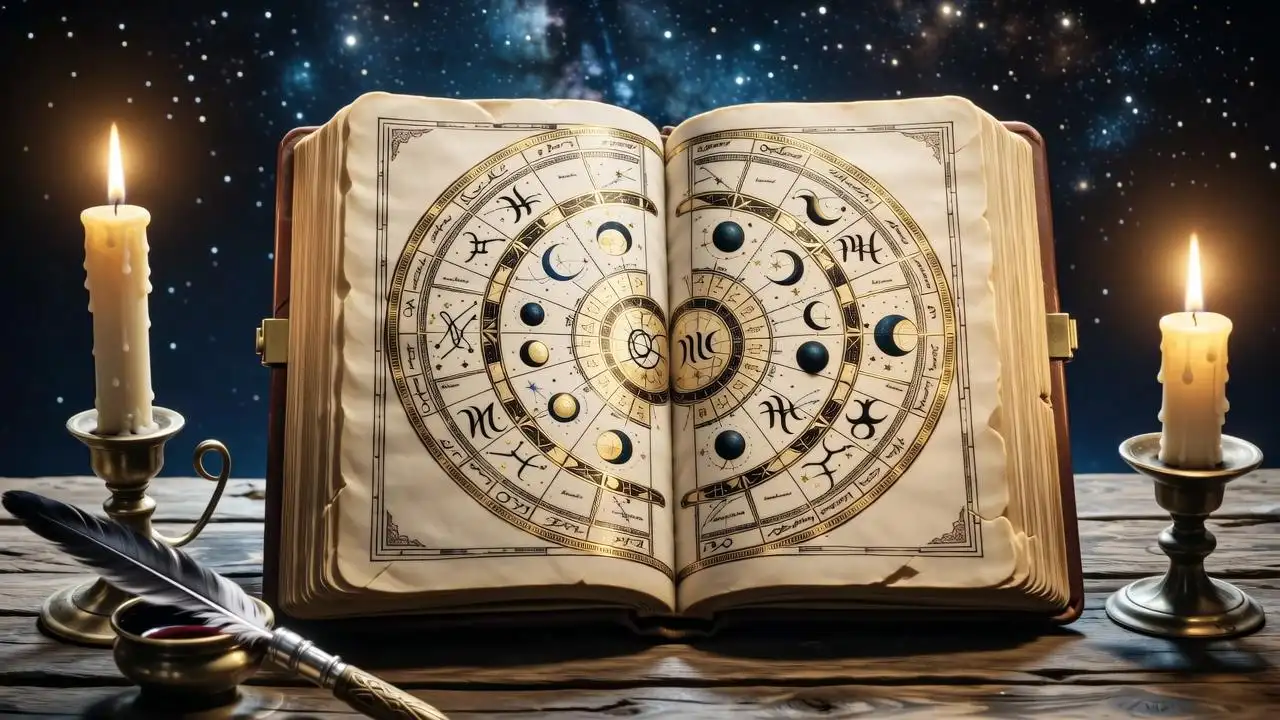
The widespread appeal of astrology today lies in its ability to provide narrative structure to complex human experiences. Millions consult their zodiac signs during major life decisions or periods of uncertainty. According to a 2023 Pew Research Center survey, approximately 29% of U.S. adults say they believe astrology is "very" or "somewhat" scientific—a figure that reflects ongoing public interest despite skepticism from the scientific community. This enduring fascination underscores the cultural significance of the astrology meaning, not necessarily as a predictive science, but as a tool for introspection and meaning-making.
The roots of astrology trace back over 4,000 years to ancient Mesopotamia, particularly in the civilizations of the Sumerians, Babylonians, and Assyrians. These early societies observed the regular movements of celestial bodies and associated them with divine will and earthly events. The earliest known astrological records come from cuneiform tablets dating to around 1800 BCE in what is now Iraq, where priests interpreted lunar eclipses and planetary alignments as omens. From Mesopotamia, astrological knowledge spread to Egypt and Greece, where it was refined and systematized.
In Hellenistic Egypt (circa 3rd century BCE to 2nd century CE), Greek philosophers combined Babylonian celestial observations with Egyptian cosmology and their own philosophical traditions. Figures like Claudius Ptolemy compiled extensive works such as the *Tetrabiblos*, one of the most influential texts in Western astrology. Ptolemy’s work laid the foundation for interpreting natal charts based on the positions of planets at the time of birth—a method still used today.
During the medieval period, Islamic scholars preserved and expanded upon classical astrological texts, translating them into Arabic and enhancing astronomical calculations. Astrology flourished in royal courts across Europe during the Renaissance, with figures like Johannes Kepler—also a pioneering astronomer—casting horoscopes for nobility. Only in the Enlightenment era did astrology begin to be systematically separated from science, as empirical methods gained dominance in understanding the natural world.
To understand the deeper meaning of astrology, one must examine its foundational components: the zodiac signs, planetary influences, and astrological houses. The zodiac is divided into twelve signs—Aries, Taurus, Gemini, Cancer, Leo, Virgo, Libra, Scorpio, Sagittarius, Capricorn, Aquarius, and Pisces—each occupying 30 degrees of the 360-degree ecliptic path of the Sun. These signs are grouped into four elements: fire (Aries, Leo, Sagittarius), earth (Taurus, Virgo, Capricorn), air (Gemini, Libra, Aquarius), and water (Cancer, Scorpio, Pisces), which reflect fundamental temperaments and modes of interaction.
Each planet in astrology symbolizes different aspects of the psyche. For example, Mercury governs communication and thought processes, Venus rules love and values, and Mars represents drive and aggression. The position of these planets at the moment of a person's birth forms the basis of a **birth chart**, also known as a natal chart. This chart maps the sky from the perspective of the birth location and time, showing how each planet falls within a zodiac sign and an astrological house.
The twelve astrological houses represent areas of life, such as identity (1st house), wealth (2nd house), relationships (7th house), and career (10th house). A planet’s placement in a specific house indicates where its energy is most likely to manifest in a person’s life. For instance, Venus in the 7th house may suggest a strong emphasis on partnerships and harmony in marriage. Together, signs, planets, and houses form a complex interpretive system that practitioners use to offer insights into personality and potential life paths.
While many people in the West are familiar with sun sign astrology—where individuals identify primarily with their Sun sign—there are several distinct astrological systems practiced globally, each with unique methodologies and cultural contexts. The most widely followed in North America and Europe is **Western tropical astrology**, which aligns the zodiac with the Earth’s seasons, beginning at the spring equinox. It focuses heavily on psychological interpretation and personal development.
In contrast, **Vedic astrology**, or Jyotish, originates from ancient Indian traditions and is rooted in the sidereal zodiac, which accounts for the gradual shift of Earth’s axis (precession). Vedic charts often include additional elements such as lunar mansions (*nakshatras*) and planetary periods (*dashas*), offering long-term forecasts and spiritual guidance. Practitioners in India frequently use Jyotish for matchmaking, naming ceremonies, and determining auspicious times for events.
**Chinese astrology** operates on a 12-year cycle, with each year associated with an animal sign—Rat, Ox, Tiger, Rabbit, Dragon, Snake, Horse, Goat, Monkey, Rooster, Dog, and Pig. These signs are influenced by the five elements (wood, fire, earth, metal, water) and the lunar calendar. Unlike Western systems, Chinese astrology places greater emphasis on the year of birth rather than precise time and location. It is commonly used in East Asian cultures for festival planning, business decisions, and family matters.
Despite its popularity, astrology is classified as a **pseudoscience** by mainstream scientific institutions, including NASA and the American Astronomical Society. Scientific criticism centers on the lack of empirical evidence supporting astrological claims and the absence of a plausible mechanism by which distant celestial bodies could influence individual personalities or events on Earth. Controlled studies, such as the famous 1985 double-blind experiment published in *Nature* by Shawn Carlson, have consistently failed to demonstrate that astrologers can predict personality traits more accurately than chance.
One common myth is that astrology relies on gravitational or electromagnetic forces. In reality, the gravitational pull of the delivering obstetrician is stronger than that of any star or planet, according to basic physics. Another misconception is that all astrologers make definitive predictions. Most modern practitioners emphasize probabilistic interpretations and personal insight rather than deterministic forecasts.
The psychological appeal of astrology can be explained by cognitive biases such as the **Barnum effect**—the tendency to accept vague, general statements as highly personal—and **confirmation bias**, where individuals remember hits and disregard misses in horoscope readings. These mental shortcuts help explain why many find astrology compelling, even in the absence of scientific support.
The astrology meaning in today’s world is multifaceted. While it lacks scientific credibility, it remains a culturally significant practice that helps many navigate questions of identity, purpose, and connection. As a symbolic language, astrology provides a framework for reflection, much like mythology or literature. Its resurgence in digital culture—through apps, social media influencers, and personalized readings—demonstrates its adaptability and enduring relevance.
However, engaging with astrology requires a balanced approach. It can be a useful tool for introspection when combined with critical thinking and self-awareness, but it should not replace professional advice in areas like health, finance, or relationships. Readers interested in exploring further might consider studying foundational texts such as Ptolemy’s *Tetrabiblos*, modern psychological astrology by Liz Greene, or skeptical analyses from scientists like Carl Sagan and Neil deGrasse Tyson.

【Disclaimer】The content related to astrology in this article is provided for informational purposes only and does not constitute professional advice in any field. Readers are encouraged to make informed decisions based on their individual circumstances and to consult qualified experts when necessary. The author and publisher assume no responsibility for any actions taken based on the information presented herein.
Eleanor Grant
|
2025.12.16
