

 Feed back
 Privacy Policy
inkcoreai.com
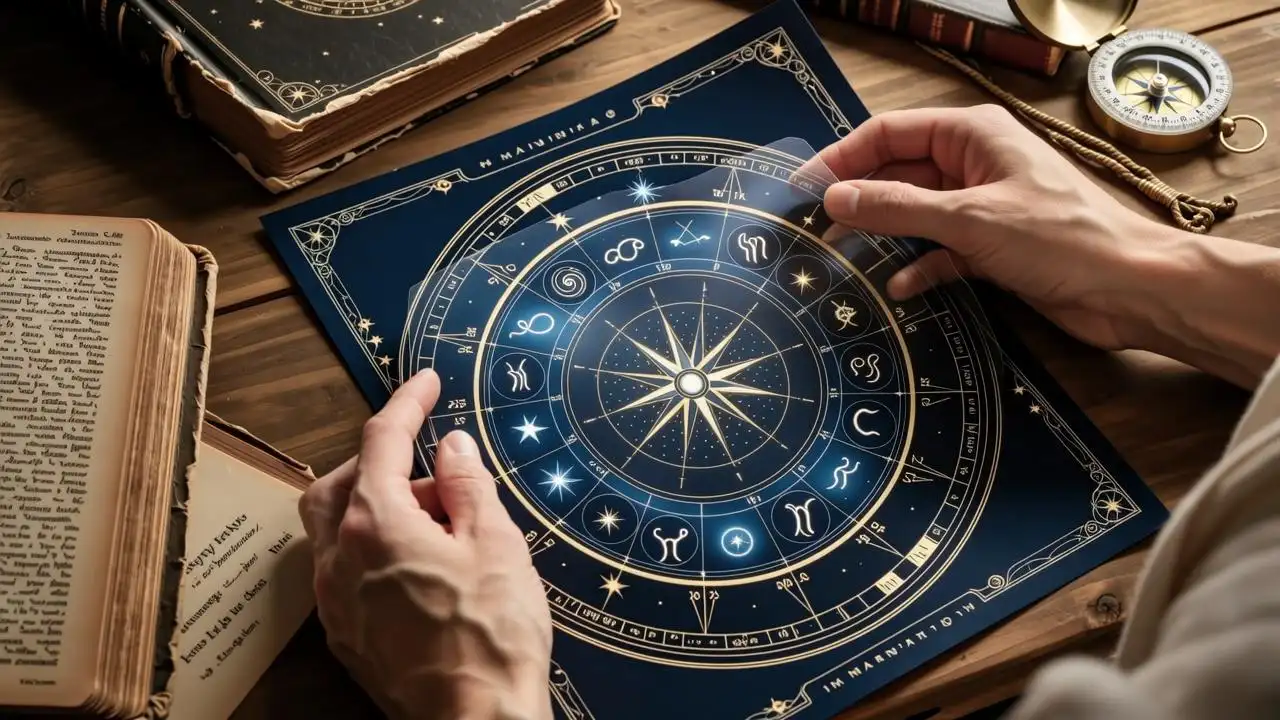
A birth chart, also known as a natal chart, is a precise astronomical map that captures the positions of the planets, stars, and other celestial bodies at the exact moment, date, and location of an individual’s birth. In the practice of astrology, this chart functions much like a cosmic fingerprint—unique to each person and serving as the cornerstone for interpreting personality traits, emotional patterns, strengths, challenges, and potential life paths. Unlike generalized horoscopes based solely on Sun signs, a birth chart provides a multidimensional perspective by incorporating multiple planetary influences across various sectors of life.

The value of a birth chart in astrology lies in its precision and depth. It allows practitioners to move beyond broad assumptions and instead analyze how planetary placements interact within a structured framework. These interpretations are not intended as deterministic predictions but rather as tools for self-reflection and personal insight. Modern astrologers use sophisticated software to calculate charts accurately, relying on verified data such as the time, date, and geographic coordinates of birth. Even a slight variation in birth time—sometimes as little as four minutes—can shift the position of the Ascendant and alter house placements, which underscores the importance of accurate input for meaningful analysis.
In technical terms, a birth chart is a two-dimensional representation of the sky divided into twelve segments called houses, with planetary symbols plotted according to their zodiacal positions at birth. This snapshot reflects the angular relationships between celestial bodies relative to Earth, forming a complex web of symbolic meaning. Astrologers interpret these configurations to understand innate tendencies, behavioral patterns, and karmic themes believed to influence human experience.
The application of astrology through the birth chart spans psychological insight, relationship dynamics, career guidance, and timing of significant life events. For instance, institutions such as the Astrological Association of Great Britain emphasize the educational and reflective role of natal charts, promoting them as instruments for increasing self-awareness rather than foretelling fate. The credibility of any interpretation hinges on the accuracy of the birth data provided—without the correct local time and place, key elements like the Rising Sign cannot be determined reliably.
Three primary components form the foundation of every birth chart: the Ascendant (or Rising Sign), the Sun Sign, and the Moon Sign. Each plays a distinct role in shaping different aspects of identity.
The Ascendant represents the mask one presents to the world—the initial impression formed in social interactions. Determined by the zodiac sign rising on the eastern horizon at the moment of birth, it governs physical appearance, demeanor, and instinctive reactions. Because it changes approximately every two hours, it requires an exact birth time to calculate correctly.
The Sun Sign, commonly referenced in daily horoscopes, symbolizes the core self—the essence of ego, willpower, and fundamental character. It reveals what motivates a person and where they seek fulfillment. While often considered the "main" zodiac sign, it is only one part of a larger psychological profile.
The Moon Sign, meanwhile, governs emotions, inner security needs, and subconscious habits. It reflects how individuals process feelings, respond to stress, and nurture themselves and others. Together, these three points offer a balanced view of outward behavior (Ascendant), conscious identity (Sun), and emotional undercurrents (Moon).
Beyond the Sun, Moon, and Ascendant, a complete birth chart includes ten planetary bodies used in modern Western astrology: the Sun, Moon, Mercury, Venus, Mars, Jupiter, Saturn, Uranus, Neptune, and Pluto. Each planet symbolizes a specific function of the psyche—for example, Mercury rules communication and thought processes, while Venus governs love, values, and aesthetics.
These planets reside in one of twelve houses, each corresponding to a domain of life. The first house relates to self-identity and appearance, the seventh to partnerships, the tenth to career and public reputation, and so on. The placement of a planet in a particular house indicates where its energy is most actively expressed. For instance, Venus in the fifth house may suggest joy found in romance or creative pursuits, whereas Venus in the tenth could indicate success in artistic professions.
Additionally, each planet and house cusp falls under one of the twelve zodiac signs, which modify how planetary energies manifest. A classic example is Mars in Aries versus Mars in Libra. Mars, the planet of action and desire, expresses itself directly, assertively, and impulsively in fiery Aries. In contrast, when Mars is in diplomatic Libra, its drive is tempered by a need for harmony, potentially leading to hesitation or indirect conflict resolution. These nuances illustrate how zodiac signs act as filters for planetary expression.
To begin interpreting your birth chart, start by generating it using reputable platforms such as Astro.com (run by the Swiss Ephemeris team, widely regarded as the gold standard in astrological computation) or the National Council for Geocosmic Research (NCGR)-endorsed tools. Input your full birth details—date, precise time (if known), and location—to ensure accuracy.
Once you have your chart, identify dominant features. A stellium—three or more planets in a single sign or house—indicates an area of intense focus in life. For example, four planets in Capricorn might suggest strong ambition and responsibility tied to that sign’s themes. Chart shapes, such as the "bucket," "seesaw," or "lighthouse" patterns identified by astrologer Marc Edmund Jones, can further reveal life purpose and relational dynamics.
Critical to interpretation are the aspects—angular distances between planets measured in degrees. Major aspects include conjunctions (0°, blending energies), trines (120°, ease and flow), squares (90°, tension and challenge), oppositions (180°, polarity and balance), and sextiles (60°, opportunity). For instance, a square between Saturn and the Moon may point to emotional restrictions or difficulties expressing vulnerability, offering insight into areas requiring growth.
The utility of a natal chart extends far beyond theoretical interest. Many use it for personal development, recognizing patterns such as recurring challenges in communication (e.g., afflicted Mercury) or natural leadership abilities (strong Leo placements). By understanding these dynamics, individuals can make informed choices about careers, relationships, and lifestyle adjustments.
In relationship astrology, comparing two charts through a technique called synastry helps assess compatibility. Overlays showing harmonious aspects—such as Venus conjunct the partner’s Sun—often correlate with mutual affection and appreciation. Conversely, challenging aspects may highlight areas needing compromise or conscious effort.
Additionally, astrologers use transits—current planetary movements in relation to the natal chart—and progressions—a symbolic advancement of the chart over time—to time significant events. For example, the well-documented Saturn return, occurring around ages 27–30, 58–60, and 88–90, is associated with major life restructuring and maturation. Awareness of such cycles enables proactive planning rather than reactive responses.
The birth chart remains the foundational tool in astrology, offering a structured, symbolic language for exploring human experience. Far from promoting superstition, serious practice emphasizes logical interpretation grounded in astronomical data and psychological insight. As noted by scholars such as Dr. Geoffrey Cornelius in *The Moment of Astrology*, traditional astrology functions as a hermeneutic system—an interpretive art akin to dream analysis or literary criticism—rather than a predictive science.
For those seeking deeper understanding, engagement with certified professionals accredited by organizations like the International Society for Astrological Research (ISAR) or the Organization for Professional Astrology (OPA) ensures access to rigorous, ethically guided interpretation. Continued study fosters a nuanced appreciation of this ancient discipline as a means of enhancing self-knowledge and interpersonal awareness.
【Disclaimer】 The content related to astrology discussed in this article is provided for informational and educational purposes only. It does not constitute professional advice in psychology, medicine, or financial decision-making. Readers are encouraged to consult qualified experts before making important life decisions. The author and publisher disclaim any liability arising from the use or reliance on the information contained herein.
Eleanor Grant
|
2025.12.16
